Family Owned & Operated Since 1980



Arsenic occurs naturally in Vermont bedrock and can dissolve into the groundwater that private wells draw from. It is colorless, odorless, and tasteless, so a laboratory test is the only way to find it. Clear Water Filtration treats arsenic with point-of-use reverse osmosis and whole-house systems, and can refer you to a certified lab for testing.
Schedule a Free Water Test 802-496-5544Arsenic in Vermont Well Water
Arsenic is a naturally occurring element found in the bedrock beneath much of Vermont. As groundwater moves through arsenic-bearing rock formations, small amounts of the element can dissolve into the water that private wells draw from. Because arsenic enters water this way, it is most often a concern for households on private wells rather than those served by a public water system.
What makes arsenic different from problems like iron or hardness is that it gives no warning. Arsenic in water is colorless, odorless, and tasteless. You cannot see it, smell it, or taste it, and it leaves no stains or residue. The only way to know whether arsenic is present in your well water - and at what level - is a laboratory test.
The Vermont Department of Health recommends that private well owners test their water for arsenic. Because public water systems are regulated and tested on a schedule, the responsibility for testing a private well falls to the homeowner. If your well has never been tested for arsenic, you may not know whether it is present.
At Clear Water Filtration, we have been working with Vermont well water since 1980. Our team understands the state's geology and the contaminants that come with it, and we hold government and municipal water treatment contracts in Vermont, including work related to emerging contaminants. That experience informs how we approach arsenic for residential customers.
Treating arsenic is very achievable with the right equipment. Once a certified laboratory confirms the arsenic level and the form it takes, we can recommend a system sized for your household - either point-of-use treatment at the kitchen tap, whole-house treatment at the point of entry, or a combination. The starting point is always knowing what is in your water.
Want to understand your full water picture? Contact our team to schedule a free in-home water test for the standard parameters, and ask about certified-lab testing for arsenic.
Standards and Why Levels Matter
The U.S. Environmental Protection Agency (EPA) sets a Maximum Contaminant Level (MCL) for arsenic in public drinking water of 10 parts per billion (0.010 mg/L). This federal limit applies to regulated public water systems. Private wells are not covered by that regulatory testing, which is why the Vermont Department of Health encourages well owners to test their own water.
The EPA limit gives homeowners a clear reference point. If a certified laboratory reports arsenic in your well at or above 10 parts per billion, treatment is the appropriate step. Some households choose to treat at lower levels as well, and a certified lab result paired with guidance from the Vermont Department of Health can help you decide what is right for your family.
Because arsenic exists in different chemical forms in water, the laboratory result matters for treatment design. The form of arsenic present affects which treatment method works best, which is one more reason a proper lab analysis comes before any system recommendation.
Arsenic cannot be measured by the field instruments used for everyday water problems. Detecting it accurately, and at the very low concentrations that matter, requires analysis by a certified laboratory.
Important: Arsenic is not covered by Clear Water Filtration's standard free in-home water test. That test measures hardness, iron, manganese, pH, TDS, and chlorine. Arsenic requires a certified laboratory test, and we can refer you to a certified-lab partner to have it done.
Straight Answers on Testing
We believe in being clear about what our free test does and does not cover. Here is how the two kinds of testing fit together, so you know exactly what to expect.
Our complimentary in-home test is performed by our own team using field instruments. It measures the contaminants most commonly found in Vermont homes: hardness, iron, manganese, pH, TDS, and chlorine. You get results on the spot, with no waiting on a mail-in report.
This test is the right starting point for the everyday water problems most Vermont households face, and it gives us a baseline picture of your water chemistry. It does not include arsenic.
Arsenic, along with contaminants like PFAS and uranium, must be measured by a certified laboratory. The water sample is collected and analyzed under controlled conditions that produce a defensible, accurate reading down to parts per billion.
Clear Water Filtration can refer you to a certified-lab partner for arsenic testing and help you understand the results. Once we know your arsenic level and its form, we design a treatment plan around it.
Arsenic Removal Methods
Arsenic treatment generally falls into two approaches: point-of-use treatment that polishes the water you drink and cook with, and point-of-entry treatment that treats all the water entering your home. The right choice depends on your laboratory results, your household, and how you use your water. We size and specify systems based on your actual test data.
A point-of-use reverse osmosis system installs at the kitchen sink and treats the water you drink and cook with. Reverse osmosis pushes water through a semipermeable membrane that rejects a wide range of dissolved contaminants. The Kinetico K5 Drinking Water Station is one example of a point-of-use system we install for Vermont homes.
For many households, treating the water used for drinking and cooking is the priority, and a dedicated drinking water station at the tap is an efficient way to do that. Your certified lab results guide whether reverse osmosis on its own meets your goals or whether it should be paired with point-of-entry treatment.
For households that want every tap addressed, a point-of-entry system treats water where it enters the home. Whole-house arsenic treatment typically uses an adsorptive media or an anion-exchange media designed to capture arsenic as water passes through. This approach treats water for bathing, laundry, and every fixture, not only the kitchen tap.
Point-of-entry arsenic systems are selected based on your water chemistry, the arsenic form and level, flow rate, and household demand. Our team designs the system to match your lab results, and our whole-house filtration experience carries directly into arsenic point-of-entry work.
Why certified results come first: Arsenic exists in more than one chemical form, and other water characteristics such as pH and the presence of iron can influence how well a given media performs. That is why we never specify an arsenic system from guesswork. A certified laboratory result lets us choose and size treatment that fits your water. Learn more about the full range of contaminants we address on our well water treatment page.
Schedule a free in-home test for the standard parameters and ask our team about certified-lab testing for arsenic. We will help you interpret the results and plan treatment.
Why Vermont Wells Are Worth Testing
Vermont sits on geologically complex bedrock, and some of those rock formations naturally contain arsenic. When groundwater moves slowly through arsenic-bearing rock, the element can dissolve into the water over time. Drilled bedrock wells, which tap deep into these formations, are where arsenic is most relevant in Vermont.
Because the source is the rock itself, arsenic levels can vary well to well, even between neighboring properties drawing from different depths or formations. A neighbor's clean result does not guarantee your water is arsenic-free, and your own past iron or hardness test tells you nothing about arsenic. Each well needs its own certified arsenic test.
This is also why the Vermont Department of Health recommends arsenic testing for private wells specifically. The state's public systems are monitored, but a private well is only as well understood as its owner chooses to make it through testing.
Vermont bedrock wells rarely have a single issue. A well with arsenic may also carry iron, manganese, hardness, or low pH. Those characteristics matter for arsenic treatment because they affect how treatment media perform and how a system should be sequenced.
Our approach looks at the whole water picture. The free in-home test gives us your iron, manganese, hardness, pH, TDS, and chlorine, while the certified lab result gives us your arsenic level. Together, those results let us design treatment that handles everything in the correct order rather than addressing one contaminant at a time.
If your well water also shows rust staining or a metallic taste, our iron removal page explains how we handle iron, which frequently appears alongside other bedrock contaminants.
Start With Real Data
Clear Water Filtration offers a free in-home water test for Vermont homeowners. We bring our own testing equipment to your home and give you results on the spot. The standard test covers the parameters below. For arsenic, we refer you to a certified-lab partner.
We measure calcium and magnesium, the minerals that cause scale, spotting, and dry skin. Hardness is the most common water complaint in Vermont homes.
Iron causes orange staining and metallic taste, and it is widespread in Vermont bedrock wells. Knowing your iron level shapes treatment for several other contaminants too.
Manganese often accompanies iron in Vermont wells and causes dark staining and bitter taste. We measure it as part of the standard test.
Water pH affects corrosion and how treatment systems perform. Acidic water is common in Vermont granite bedrock and matters for arsenic treatment design.
TDS gives us a broad picture of the overall mineral load in your water, which helps us interpret the rest of your results.
For homes on a municipal supply, we check chlorine as part of the complete water profile. Arsenic is handled separately through a certified lab.
For arsenic, PFAS, uranium, and bacteria, a certified laboratory test is required. We can refer you to a certified-lab partner and help you interpret the results. Our water testing page explains every option.
Complete Well Water Treatment
Arsenic is one of several contaminants Vermont wells can carry. Our approach looks at your full water picture and designs treatment that addresses every issue in the right order.
Vermont wells face a range of contaminants beyond arsenic - hardness, iron, manganese, bacteria, and low pH. Our well water treatment services cover the full spectrum.
A point-of-use reverse osmosis system treats the water you drink and cook with, and is a common choice for arsenic at the kitchen tap.
We are an authorized Vermont Kinetico dealer, including the K5 Drinking Water Station used for point-of-use treatment.
Unsure what is in your water? Our water testing services explain the free in-home test and certified-lab options.
Learn MoreFor every system we install for Vermont homes, from the free in-home water test through whole-home treatment and drinking water systems, see the residential water treatment hub.
Where We Serve
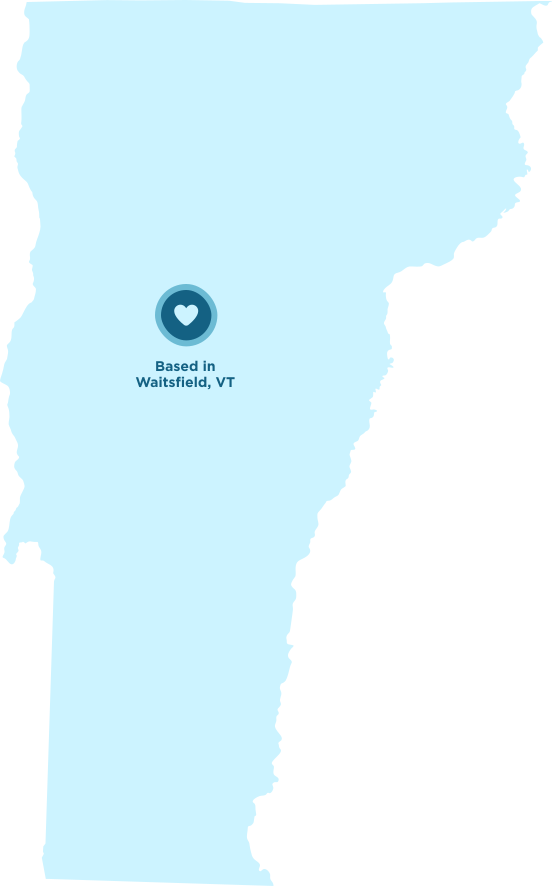
From our home base in Waitsfield, VT, we provide water treatment services throughout the Green Mountain State. Each community has its own water quality characteristics based on local geology and water sources - and after 45 years, we've tested thousands of wells across Vermont and understand the regional variations that affect which treatment approaches work best.
We're Here to Help
Hear From Your Neighbors

Bill Cherry
Switchback Brewing

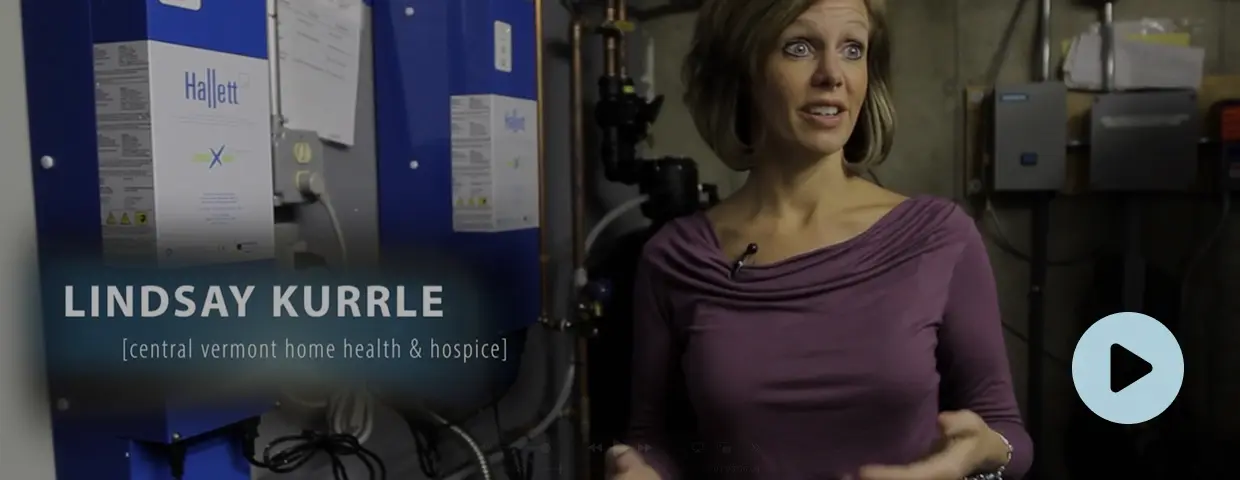
Lindsay Kurrle
Community Relations Coordinator


Win Smith
President

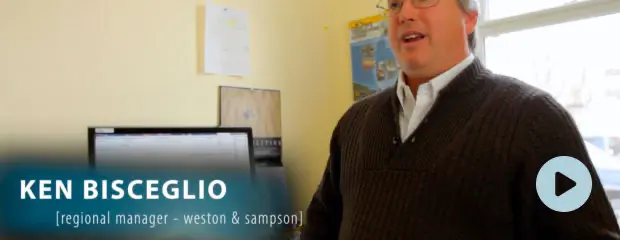
Ken Bisceglio
Regional Manager

Let's Find Out What's in Your Water
Arsenic is a solvable problem, but it starts with knowing whether it is present. Because arsenic gives no warning signs, a certified laboratory test is the only way to find it, and the Vermont Department of Health recommends testing private wells.
Clear Water Filtration has worked with Vermont well water since 1980. We can refer you to a certified-lab partner for arsenic testing, help you understand the results, and design a system sized for your home - whether that is point-of-use reverse osmosis at the kitchen tap, whole-house treatment at the point of entry, or both.
When you call us at 802-496-5544, you talk to a local Vermont team member. We serve all of Vermont seven days a week.

© Red Barn Media Group 2026