Family Owned & Operated Since 1980



Hard water is one of the most widespread water quality issues in Vermont homes. Understanding what it is, where it comes from, and what to do about it helps you make an informed decision for your family and your plumbing. When the answer is a softener, our licensed plumbers handle water softener installation in Vermont homes statewide.
Schedule Water Softener Installation Request ServiceVermont Geology
Hard water forms when rainwater or snowmelt seeps through the ground and dissolves minerals from the bedrock and soil before reaching your well or aquifer. Water hardness is measured by the concentration of dissolved calcium and magnesium - minerals that are harmless to drink but create a long list of household problems.
Vermont's geology makes hard water especially common here. Much of the state sits above limestone, dolomite, and marble formations - rock types that are rich in calcium carbonate and readily give up those minerals to passing groundwater. The Champlain Valley, in particular, has extensive limestone and dolomite bedrock that contributes to elevated hardness in municipal supplies and private wells alike.
Private bedrock wells drilled through Vermont's ancient limestone and crystalline rock tend to pick up the most hardness, because the water spends more time in contact with mineral-bearing rock before it reaches the surface.
How Hard Is Your Water?
Water hardness is measured in grains per gallon (gpg) or parts per million (ppm). The U.S. Geological Survey classifies water as soft, moderately hard, hard, or very hard based on these measurements. In Vermont, hardness varies by region and water source - municipal supplies in cities like Burlington tend to be moderately hard, while private bedrock wells in rural areas are often hard to very hard.
The only way to know your actual hardness level is to have your water tested. Clear Water Filtration offers free in-home water testing that measures hardness along with iron, manganese, pH, TDS, and chlorine.
0-1 gpg (0-17 ppm)
No hardness minerals present. Lather forms easily. No scale buildup. Rare in Vermont private wells.
1-3.5 gpg (17-60 ppm)
Minimal effects. Some municipal supplies in Vermont fall in this range.
3.5-7 gpg (60-120 ppm)
Noticeable scale on fixtures. Soap lathers less. Common in Champlain Valley municipal water.
7-10.5 gpg (120-180 ppm)
Significant scale buildup. Appliance damage over time. Common in Vermont private bedrock wells.
Over 10.5 gpg (over 180 ppm)
Severe problems requiring treatment. Often found in deep Vermont bedrock wells in limestone-heavy regions.
Recognizing the Problem
Hard water produces specific, recognizable symptoms in your home. If you notice several of these, a water test is the logical next step.
The chalky white or grey mineral deposits that build up on faucet aerators, showerheads, and around drains are calcium carbonate scale - the most visible sign of hard water. The same buildup forms inside your pipes and water heater where you cannot see it, restricting flow and reducing efficiency over time.
Hard water reacts with soap to form an insoluble curd that clings to bathtubs, shower walls, and your skin. If you constantly battle soap scum on your shower doors or a gray ring around the tub, that residue is a chemical reaction product of hard water and soap.
Soap and shampoo lather poorly in hard water because dissolved minerals bind to the surfactants before they can do their job. If you find yourself using twice as much dish soap, laundry detergent, or shampoo to get a reasonable result, hard water is likely the reason.
Hard water makes it harder for soap to rinse fully from your skin, leaving a mineral film that can dry out skin and irritate people prone to eczema or sensitive skin. Hair washed in hard water often feels dry, looks dull, and is harder to manage because mineral deposits coat the hair shaft.
Clothes and linens washed in hard water gradually accumulate mineral deposits in the fabric, making them feel scratchy and stiff. Colors fade faster as the minerals interfere with dyes. White fabrics can develop a grey or dingy tint. Towels lose their softness even when washed regularly.
White spots and cloudy film on dishes and glassware after washing - even after running the dishwasher - are dried mineral deposits left behind as the water evaporates. This spotting is more visible on clear glass and dark dishes, and it happens whether you wash by hand or use a dishwasher.
Scale buildup inside water heaters forces the heating element to work harder, increasing energy use and shortening the appliance's life. The same buildup affects dishwashers, washing machines, coffee makers, and ice makers. Hard water is a leading cause of premature appliance failure in Vermont homes.
Mineral scale accumulates inside water supply pipes gradually, slowly narrowing the passage for water flow. If your water pressure has decreased noticeably over several years without an obvious plumbing cause, scale buildup inside older pipes may be a contributing factor.
Vermont Water Hardness by Region
Water hardness in Vermont varies significantly depending on whether your water comes from a municipal supply or a private well, and which county you live in. Municipal supplies from surface water sources (lakes, rivers, reservoirs) tend to be softer than groundwater from bedrock wells, because surface water doesn't spend as much time in contact with mineral-bearing rock.
Chittenden County sits above extensive limestone and dolomite bedrock, which gives both municipal water and private wells in this region moderate to high hardness. Champlain Water District municipal water is moderately hard - enough to cause scale and soap issues. Private bedrock wells in surrounding towns and hillside neighborhoods typically test harder than the municipal supply.
The Mad River Valley and surrounding Washington County have a mix of geological formations. Many private wells in this region are hard to very hard, particularly those drilled into limestone or crystalline bedrock. Our own headquarters in Waitsfield sits in an area where private well hardness varies considerably from property to property - one of the reasons we always test before recommending a system.
Areas in the Northeast Kingdom often have private wells drawing from granite and gneiss bedrock, which tends to produce softer water than limestone regions. However, hardness can still be significant in areas with calcium-bearing rock layers, and iron is a more common concern in this region than in the Champlain Valley.
Addison County sits over some of Vermont's most calcium-rich bedrock, including marble and limestone formations in the valley. Private wells in this region frequently test hard to very hard. The combination of high hardness and sometimes elevated iron is common in Addison County bedrock wells.
Rutland County has marble quarrying history for good reason - the bedrock is calcium-rich. Private wells in Rutland County commonly show elevated hardness. The Bennington area includes marble formations that contribute hardness to groundwater in that region as well.
In our 45+ years of testing water throughout Vermont, we consistently find that hardness is moderate to high across the Champlain Valley on municipal supply, and often hard to very hard in private bedrock wells statewide. The specific level for your home depends on your geology, well depth, and water source. A free in-home test from our team gives you the exact number - not an estimate.
Your Options
Once you confirm hard water through testing, you have several treatment paths to consider. The right choice depends on your hardness level, whether you have other water quality concerns like iron or bacteria, and your household preferences.
Ion exchange water softeners are the proven standard for hard water removal. Hardness minerals are exchanged for sodium ions as water passes through a resin bed, producing genuinely soft water throughout your home. For Vermont homes with moderate to very hard water, a salt-based softener is the most reliable and complete solution.
Best for: Hard to very hard water, homes with iron or manganese concerns, whole-house protection for appliances and plumbing.
Template-assisted crystallization (TAC) systems, such as the Aqua Bubble conditioner we carry, alter the structure of hardness minerals so they are less likely to adhere to surfaces. These systems do not remove hardness minerals from the water - the hardness level remains unchanged - but they can reduce scale formation in pipes and appliances.
Best for: Homeowners who prefer to avoid salt, lightly to moderately hard water, scale prevention without softening.
Before choosing a treatment approach, get your water tested. Our free in-home water evaluation tests for hardness, iron, manganese, pH, TDS, and chlorine. Knowing your exact numbers lets us recommend the right system for your situation - not a generic one.
We have been testing Vermont water since 1980. Our Class III Water Operator on staff (Jen Fleckenstein, CWS) brings professional-level water chemistry knowledge to every evaluation.
Clear Water Filtration has installed water softeners throughout Vermont since 1980. As an authorized Kinetico dealer for 30+ years with a Class III Water Operator on staff, we bring the expertise to design the right system for your water and your home.
Your Trusted Partner
Selecting a water treatment provider involves trust. You are inviting someone into your home to work on systems that affect your family's daily life. Here is why families throughout Vermont have trusted Clear Water Filtration for over 40 years:
Clear Water Filtration was founded in 1980 and remains family-owned and operated today. Steve Parker and Jen Fleckenstein carry forward the tradition of personal service and community commitment established by their father.
Our long-standing partnership with Kinetico reflects our commitment to quality. We have completed extensive training on Kinetico equipment and stay current with the latest technology and service procedures.
Our water treatment technicians are licensed plumbers, ensuring every installation meets code requirements and integrates properly with your existing plumbing.
Jen Fleckenstein holds a Class III Water Operator license and CWS (Certified Water Specialist) credential. This professional-level water chemistry expertise informs every evaluation and system recommendation we make.
Membership in the Water Quality Association and Vermont Rural Water Association keeps our team current with industry standards and Vermont-specific water quality issues.
Hear From Your Neighbors

Bill Cherry
Switchback Brewing

Lindsay Kurrle
Community Relations Coordinator


Win Smith
President

Ken Bisceglio
Regional Manager

Where We Serve
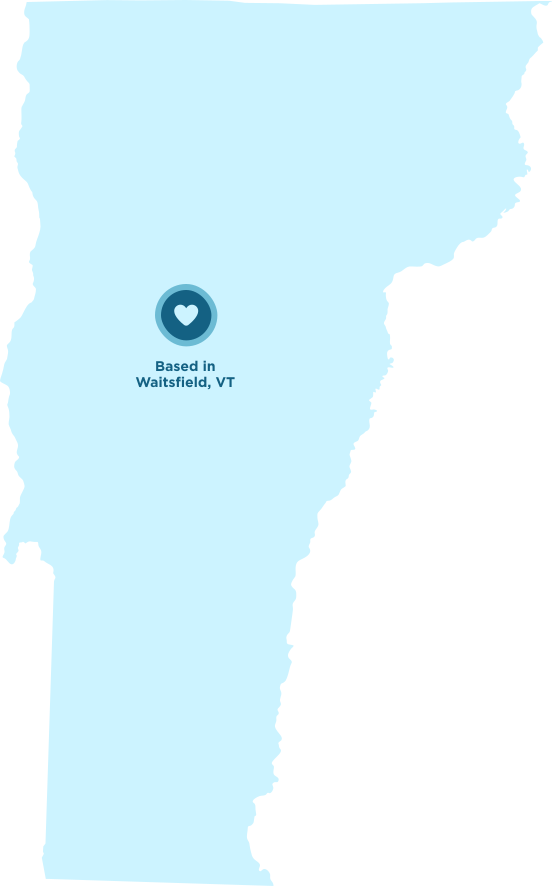
From our home base in Waitsfield, VT, we provide water treatment services throughout the Green Mountain State. Each community has its own water quality characteristics based on local geology and water sources - and after 45 years, we've tested thousands of wells across Vermont and understand the regional variations that affect which treatment approaches work best.
We're Here to Help
Let's Get Started Together
Hard water is one of the most solvable water quality problems there is. The right water softener eliminates scale buildup, restores soap lather, protects your appliances, and improves how your water feels - on the first day it's installed.
Clear Water Filtration has been solving hard water problems for Vermont families since 1980. We start with a free in-home water test, explain exactly what we find, and recommend the right system for your specific hardness level and water chemistry. No pressure, no obligation - just honest information from people who have been doing this work in Vermont for over 45 years.
802-496-5544 Schedule Water Softener Installation
Explore More
Every residential system we install, from the free in-home water test through whole-home treatment and drinking water systems. See everything on the residential water treatment hub.
Water Testing POE vs. POU Systems Water Softening Whole House Filtration Reverse Osmosis
© Red Barn Media Group 2026